
I love building things. I always have.
As a kid, it was Lego. Later, it was property development and building houses. Throughout my career, it has been mobile apps, websites and software: taking an idea and turning it into something people can actually use.
AI has given me the ability to build more than I ever thought possible. More of the ideas I've been sitting on. More of the things businesses need but could never quite justify building. More ambitious products, with fewer constraints on where I can take them.
That's why I'm an AI optimist. I can see the change in my own work.
What changed for me
HotHealth is a Ruby on Rails project I've worked on for about ten years, generally with two or three developers, and it now contains around half a million lines of code.
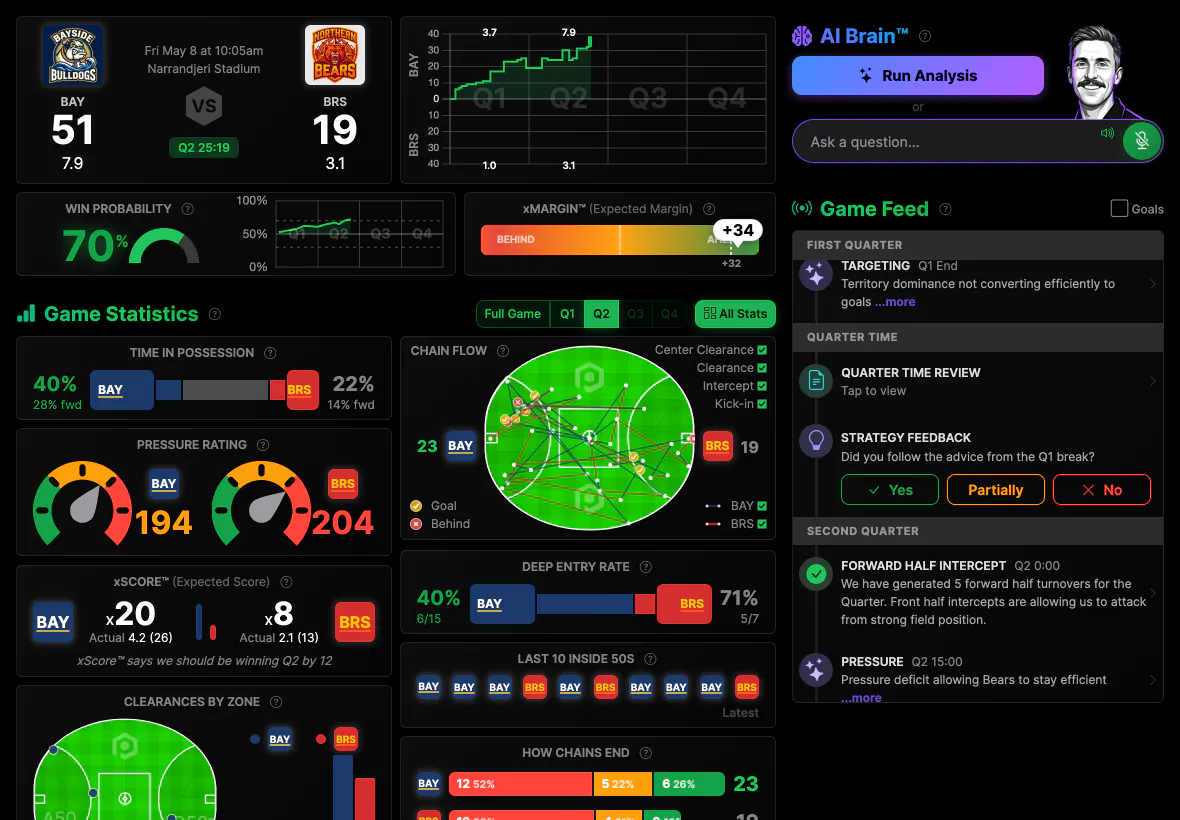
I started Powercoach around October 2025. Working on it part time, in under a year I've built a codebase of around 1.5 million lines, much of it written by AI under my direction.
That's roughly three times the code in a tenth of the time, with one person working part time. Set against two developers over ten years as a rough baseline, it works out to around 60 times the code volume per developer-year — before even accounting for the fact I've only been working on it part time.
Lines of code is a crude measure. More code can mean more features, more tests, more repetition or simply more to maintain; it doesn't tell you whether a product is useful, reliable or well designed, and this isn't a controlled productivity study. But even with generous caveats, a shift of that size isn't subtle.
Powercoach has made the change tangible for me. I've been able to build something I simply couldn't have built on my own in the past. Even what exists today would previously have taken years and a massive team to deliver. There are things coming that I'm incredibly excited about. I can't share all the details yet, but AI has changed the scope of what I can attempt.
That is what matters to me about those numbers: the ability to turn an idea into a product that would otherwise have been beyond my reach.
Why I think this scales across the industry
There are countless problems that could be solved with software, but haven't been because the cost of building it was too high. An awkward internal process. A specialised tool for a small business. A product serving a niche that couldn't support a traditional development budget.
As development becomes more efficient, more of those problems become worth solving.
This is the possibility that interests me in Jevons paradox: when something becomes more efficient and affordable, demand for it can increase enough that we end up using more of it. I think software has an enormous amount of that unmet demand.
The jobs question
Which brings us to the conversation about jobs.
Businesses have a choice about how they use this capability. They can aim for the same output with fewer people and take the saving. Or they can expand their ambitions: improve the product, serve more customers, tackle the backlog and build things they previously couldn't afford to attempt.
If two competing businesses take those different paths, my bet is on the one that keeps building. Cutting costs may help in the short term. Over time, I think the business that turns its new capability into better products and better service will have the stronger advantage.
I'm sceptical of the assumption that this leads inevitably to mass unemployment. There may be fewer jobs in some areas and more in others as new products, services and businesses become possible. The opportunities created deserve as much attention as the work that can be automated.
At the time of writing, headline unemployment remains low by historical standards in both the United States and Australia.1 Those figures don't isolate AI's effect on employment, but I don't see them as evidence that we're running out of work for people to do.
I'm also sceptical when AI becomes the explanation for a company's job cuts. A company citing AI doesn't, by itself, establish that the technology made those cuts necessary. I'd want to understand what actually changed in the business before treating the announcement as proof that people are becoming obsolete.
My optimism is about what we can choose to do with this technology: increase our capacity and our ambitions, and put it to work on the backlog of problems that were never worth solving before.
I know developers who remain reluctant to use AI or change the way they work. I think they're missing an enormous opportunity. My own experience has given me every reason to keep exploring what these tools can do.
The human part

Vibe coding, and what still needs a human
I also hear that “vibe coding” will make software developers obsolete because anyone can now build an app.
Someone with no programming experience can already get surprisingly far. They can turn an idea into a working prototype, test a concept or build a tool that solves a particular problem for them. I think that's fantastic. More people being able to make things is something to welcome.
But a working prototype is one stage in the life of a product. As software grows, you have to deal with architecture, security, testing, integrations, maintenance and all the unexpected ways people use it. Someone has to understand the trade-offs and take responsibility when something goes wrong.
I've worked through some incredibly complicated problems with the most capable AI models available to me. They're impressive. They still need direction, scrutiny and someone who can recognise when a plausible answer is the wrong one.
Three human contributions stand out to me: taste, judgement and trust.
Taste is knowing what deserves to exist, what to leave out and how something should feel to the person using it. AI can generate options quickly. Deciding which option is right takes an understanding of the people and the purpose behind the product.
Judgement is knowing which problem to solve, which compromises are acceptable and when to question an answer. It includes knowing when a simpler solution is better, or when a business needs to change a process before building more software around it.
Trust comes from being accountable. A client needs confidence that their software works, their information is handled appropriately and someone will stand behind the result. Using AI doesn't transfer that responsibility to the model. When I deliver software, I remain responsible for the work I deliver.
Testing as the safety net
AI also makes it much more practical to write and maintain comprehensive automated tests, including achieving 100% code coverage. The tests still need to check the right outcomes: a coverage number alone can't tell you that every behaviour is correct.2
I use extensive end-to-end testing because I want to know that the application works through the journeys people actually take. Can they complete the task? Do the different parts of the system work together? Does an existing feature still behave correctly after something else changes?
That is particularly valuable when working with AI. An agent may not have the full context of a large application. It can make a change that looks right in isolation and break something elsewhere. End-to-end tests help catch those regressions. AI makes the work of building and maintaining that safety net much more achievable, even as the application grows.
I still have to decide what correct behaviour looks like and make sure the tests check it properly. The ability to generate both code and tests quickly makes my judgement about them more important.
I don't know how far AI will eventually go. My experience today tells me that human involvement remains essential. Software serves people, and understanding those people is a central part of building it well.
Security
The same practical attitude applies to security. AI gives people with bad intentions more capability. It also gives people building defences new ways to find weaknesses, investigate problems and improve safeguards.
I don't assume those forces will automatically balance out. We have to put the technology to work on defence and keep improving the systems around it. I see that as part of the responsibility of building with AI.
Quick, cheap, good — pick two?
For years, software development had a familiar rule: “Quick, cheap and good. Pick two.”
I think AI is changing that bargain. With experienced people directing the work, it is becoming possible to deliver software faster, at a lower cost and to a high standard at the same time. Getting all three still takes care. The opportunity to do it is much greater than it was.
For businesses, that means ideas that once looked too expensive or too ambitious deserve another look. For developers, it means more room to experiment, solve problems and build useful things. I hope the benefits reach well beyond our industry, and I think the choices we make now will help determine whether they do.
I can't think of a more exciting time to be a software developer and an entrepreneur. Following the progress of AI often feels like Christmas every day: another capability, another possibility, another idea I can finally have a go at.
The pace of change is extraordinary, and I embrace it. I enjoy learning new tools, questioning familiar ways of working and discovering what has become possible. I want to work with people who embrace that change too: people who are curious, willing to try new approaches and excited about what we can build together.
I still get the same satisfaction I did as a kid with a box of Lego. I can imagine something, start putting it together and see it become real.
Now I can build more of it. And that's what I intend to do.
Notes & sources
US Bureau of Labor Statistics, Employment Situation, August 2026, released 4 September 2026; Australian Bureau of Statistics, Labour Force, Australia, July 2026, released 20 August 2026. Both figures are seasonally adjusted and reflect the latest releases available on 11 September 2026. ↩
Google's testing team explains the distinction between executing code and verifying its behaviour in Code Coverage Best Practices. ↩